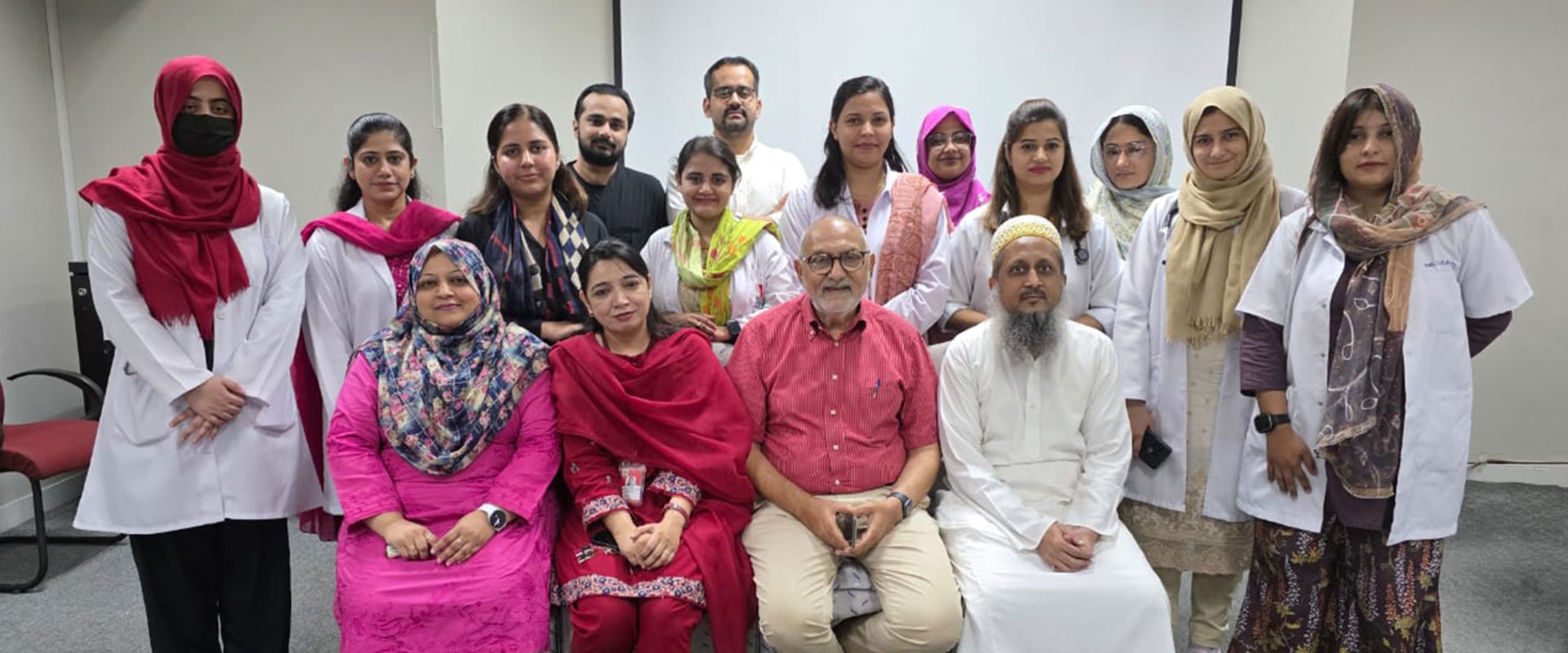
The Kidney Centre Postgraduate Training Institute (TKC-PGTI)
Message from the Head of Department

The Kidney Centre Post Graduate Training Institute provides an ideal environment for a comprehensive Nephrology Residency Program, with strengths in clinical training, a well-structured academic curriculum, and compassionate patient care. Under the guidance of experienced faculty in a vibrant academic setting, residents gain extensive exposure to inpatient and outpatient nephrology, dialysis, transplantation, and critical care nephrology. The program also emphasizes hands-on procedural training, including renal biopsies (a skill that is often limited in other programs) and placement of central venous lines. Our graduates have gone on to excel in both academic and non-academic institutions, reflecting the strength and quality of the training program.
Message from the Residency Program Director
The Nephrology Department at The Kidney Centre Postgraduate Training Institute (TKC-PGTI) provides excellent treatment service to patients with all kind of renal and systemic diseases with renal involvement. We have a state of the art ICU, hemodialysis units, emergency services and renal transplant facility. As a training and teaching institute, this gives nephrology fellows (FCPS Nephrology), vast exposure and learning experience, in all kinds of renal diseases, hemodialysis and renal transplant. In collaboration with other training institutes, we organize workshops for special training. The four Nephrologists on board are Supervisors and Examiners at the College of Physicians and Surgeons of Pakistan (CPSP), providing additional benefit in teaching activities and research work, for the nephrology fellows.
Our residency program has provided the society with well trained, highly educated, and hardworking Nephrologists and we are striving to improve it further.
Objectives
The objectives of FCPS Nephrology training at TKC-PGTI is to provide comprehensive training in the field of Nephrology including:
- Learn basics and advanced concepts of Nephrology.
- Be able to approach the patient including history taking, examination, diagnosis and treatment, independently.
- Be able to independently solve and handle complex cases.
- Be able to perform bedside procedures like ascitic tap, pleural tap and specialized procedures like central venous catheter placement and renal biopsy, independently.
- Acquire professional behavior and academic excellence.
- Develop good knowledge of research work and write research papers for national and international medical journals.
- Develop administrative skills and communication skills.
- Be a useful, hardworking professional to serve the country and its people.
Emphasis on the Development of Professional Competencies and Attitudes
At TKC-PGTI, we make sure that our fellows develop good professional competencies and attitudes. We emphasize education, knowledge, practical implementation of knowledge, and role modelling, by bedside teaching, lectures, group discussions, hands-on workshops, and encouragement.
Towards Patients
At the end of training, our fellows will be able to:
- Develop a good rapport with all patients to provide treatment with empathy and excellent care.
- Develop good communication and will be able to answer patients’ queries with knowledge and excellent communication skills.
- Develop knowledge and skills to communicate and perform invasive and non-invasive procedures with international standards of hygienic practice and care.
- Develop skills to disseminate important knowledge to patient and their families.
- Develop professional skills on how to handle difficult situations and patients.
Towards Self-Development
At the end of training, our fellows will be able to:
- Acquire knowledge and understanding of Nephrology and how to implement it, while dealing with real patients.
- Develop a non-biased attitude towards every patient and human being.
- Develop skills to deal with patients with empathy, compassion, and justice.
- Develop habits to improve self-learning, thirst for gaining more knowledge and intellect.
- Develop competency in dealing with stress.
- Develop good rapport with colleagues and allied health workers.
- Develop skills to handle criticism with a positive attitude.
Towards Society
At the end of training, our fellows will be able to:
- Develop the understanding of cost-effective care without compromise on management of the patient’s illness.
- Develop the understanding to balance high-quality healthcare using the available resources.
- Develop understanding of setting up health clinics and dialysis units in urban and rural areas.
- Understand how to utilize telemedicine for providing health care at the patient’s home.
Administrative Setup
Head of Department › Residency Program Director › Chief Resident
Duration of Training
Three years
Teaching Rooms
- Seminar Room
- Class Room
- Bedside
- Library
Rotations
- Hemodialysis: 1 month in the Hemodialysis Unit of TKC-PGTI.
- Transplant: 1 month, which may be extended to 2 months in collaboration with other transplant centers.
- ICU: 1 month.
- Radiology: 1 month.
Workshops / IMM at CPSP
Mandatory workshops that all residents need to complete during training.
- Research Methodology
- Communication Skills
- Basics of Computers and the Internet
Along with it, all residents need to pass IMM exam at CPSP before completing training and appearing in the FCPS II Nephrology exam.
Competencies
Details in “General Information Regarding Nephrology Residency” handout, which will be provided to new residents along with “Curriculum” at the time of induction.
Research
Trainees will be required to write 1-2 research papers during the training, under the supervision of his/her Supervisor.
Evaluation and Assessment
- Bedside assessment will be done by the consultant on call during rounds.
- Clinical work and procedural skills assessment will be done by the Supervisor by completing CPSP’s mini-CEX and DOPS proforma, every 6 months.
- Assessment of presentation skills, e.g. case discussion, journal club, core discussion and PowerPoint presentations, will be done by the assigned consultant taking the class.
- Assessment of communication skills will be done at bedside during rounds, during academic activity, and by organizing workshops.
- MCQ tests will be taken every 3 months.
- For Residents Level III, an FCPS Nephrology-format exam will be taken at the end of training.
Feedback
Feedback will be provided by the Residency Program Director to residents, after faculty evaluation, biannually.
Eligibility
Candidates who have completed 2 years of training in general medicine from a recognized center of CPSP or candidates who have passed FCPS Medicine can join Nephrology training at TKC-PGTI for FCPS Nephrology.
How to Apply
Submit your CV at
[email protected]
or
[email protected].